 Comparison
Best Eczema Cream for Winter Flare-Ups Compared
Last Updated: November 16, 2026
Quick Summary
The best eczema cream for winter flare-ups is a thick, fragrance-free cream for the body, since thicker products hold moisture longer in cold, dry air. Apply it within three minutes of patting skin dry after a short lukewarm bath, and use an ointment on cracked areas.
- Thicker products hold moisture longer, so choose creams or ointments over lotions in winter.
- Pat skin dry and apply moisturizer within three minutes while still slightly damp.
- Keep baths short and lukewarm, and avoid very hot showers that strip natural oils.
- Layer prescribed treatment first, wait a few minutes, then apply moisturizer.
- See a doctor if oozing, warmth, spreading redness or fever appears, or if itching disrupts sleep.
Table of Contents
- Why Winter Weather Triggers Eczema Flare-Ups
- How Cream, Lotion and Ointment Differ for Winter Skin
- Side-by-Side Comparison of Eczema Creams for Winter
- Choosing a Best Moisturizer for Eczema on Face
- When an Eczema Ointment Works Better Than a Cream
- A Practical Winter Eczema Treatment Routine
- Safety Limits, Hydrocortisone and When to See a Doctor
- Booking a Skin Consultation or Choosing Your Winter Moisturizer
- Frequently Asked Questions
Winter is when many people with eczema see their flare-ups return, and the eczema cream you reach for can make a real difference. This guide compares the main cream, lotion and ointment options for dry, cold-weather skin, and explains how to choose between them. Dry indoor heat and cold outdoor air strip moisture from the skin barrier, so the right product depends on where the irritation sits and how severe it is. Eczema is a chronic condition, so the goal is steady hydration and early action rather than a single miracle product, and a dermatologist should guide anything beyond routine care.
Why Winter Weather Triggers Eczema Flare-Ups
Cold air holds less moisture, and indoor heating dries the air further. Together they pull water out of the skin's outer layer, which is already weakened in people with eczema-prone skin. A damaged barrier lets irritants in and moisture out, which is why itching and cracking often peak in January and February.
Hot showers make things worse. Long, very warm baths strip natural oils faster than lukewarm water does. Pat the skin dry and apply moisturizer while the skin is still slightly damp to lock hydration in.
How Cream, Lotion and Ointment Differ for Winter Skin
Moisturizers come in three main textures, and they are not interchangeable. Lotions contain the most water and feel lightest, so they suit mild dryness and large areas of skin. Creams sit in the middle, with more oil than lotions. Ointments contain the most oil and form the thickest protective layer.
For winter flare-ups, the thicker the product, the longer it holds moisture. Lotions are easy to spread and fine for daily upkeep on the body. Creams work well for most flare-prone areas. Ointments are better for severely dry patches, cracked skin and hands that take heavy daily wear.
Side-by-Side Comparison of Eczema Creams for Winter
The products below are the eczema-focused options found in current recommendation lists. Pricing varies by retailer and size, so check the seller for current cost. The comparison below focuses on what the sources we reviewed actually state, and flags where information is missing rather than filling gaps with assumptions.
| Product | Format | Key ingredients (as listed) | Best for | Texture / feel | Limitations noted | Price note |
|---|---|---|---|---|---|---|
| La Roche-Posay Lipikar Eczema Soothing Relief Cream | Cream | Not listed in the sources reviewed | All-over use during flare-ups | Cream texture; richer than a lotion | Ingredients and package sizes not stated in the sources we reviewed | Listed at $17 |
| Vanicream Moisturizing Cream | Cream | Not listed in the sources reviewed | Eczema-prone skin needing a richer formula | Cream texture; more oil than a lotion | No winter-specific claim is made for it | Not stated |
| CeraVe Daily Moisturizing Lotion | Lotion | Not listed in the sources reviewed | Daily use on milder dryness | Light lotion; highest water content of the three formats | May not hold moisture as long in very cold weather | Not stated |
| Aveeno Eczema Care Moisturizing Cream | Cream | Not listed in the sources reviewed | Eczema-focused routine care | Cream texture | Recognized by the Eczema Society of Canada, but no winter-specific claim | Not stated |
| Mamatuziosoil Pain Relief Ointment | Ointment | An-Algea (per product listing) | Thick protection for cracked, sore areas | Ointment; greasiest of the formats | Results vary by person and by flare | See our website for current prices |
How to read this table. The three formats differ mainly in oil-to-water ratio. Lotions contain the most water and feel lightest, so they suit mild dryness and large areas of skin. Creams sit in the middle, with more oil than lotions. Ointments contain the most oil and form the thickest protective layer. For winter flare-ups, the thicker the product, the longer it holds moisture, but the trade-off is texture and how often you will actually reapply.
La Roche-Posay Lipikar Eczema Soothing Relief Cream is suited to all-over use during flare-ups.
Vanicream Moisturizing Cream is a cream format, which generally carries more oil than a lotion.
CeraVe Daily Moisturizing Lotion is a lighter daily option.
Mamatuziosoil Pain Relief Ointment is an ointment format. Browse the Nature's Touch shea butter with CBD for a moisturizing option sold on this site.
Watch out: Many people buy the thinnest product on the shelf for winter. A lotion can feel adequate in a warm room and still fail outdoors. Test a thicker product for one week before deciding, and note how often you need to reapply, a product that needs three applications a day may cost more per month than a thicker one used twice.
Cost per use, not sticker price. A $17 cream used twice daily on the whole body may last a few weeks, while a larger tub of a basic cream used the same way may last longer. Compare cost per ounce where the seller lists package size, and factor in how often you reapply. Availability also matters: a product you can buy locally and repurchase easily is more useful for daily care than one that requires waiting for shipping during a flare.
Where each format fits. Creams work well for most flare-prone areas on the body. Lotions are fine for daily upkeep on milder dryness but are the weakest choice for very cold, windy days. Ointments are better for severely dry patches, cracked skin and hands that take heavy daily wear. None of these products is a substitute for prescribed treatment when a flare is moderate to severe.
Choosing a Best Moisturizer for Eczema on Face
Facial skin is thinner and more reactive than body skin, so fragrance and harsh additives matter more. Choose a fragrance-free, gentle product and avoid anything you have reacted to before. A natural skin conditioner made with gentle, carefully chosen ingredients is one option to view for sensitive face skin.
Apply a small amount twice a day, and test a patch on the jawline first for a few days. Stop using any product that stings, burns or worsens redness.
When an Eczema Ointment Works Better Than a Cream
Use an ointment when skin is cracked, very dry or slow to heal, or when hands are exposed to water and cold all day. Ointments form a longer-lasting seal than creams. You can see the Pain Relief Ointment with An-Algea sold on this site for thick protection of cracked, sore skin. The trade-off is texture: they feel greasy, so many people use them at night.
A Practical Winter Eczema Treatment Routine
Consistency matters more than the product itself. A simple routine, with the timing and layering that most practitioners recommend:
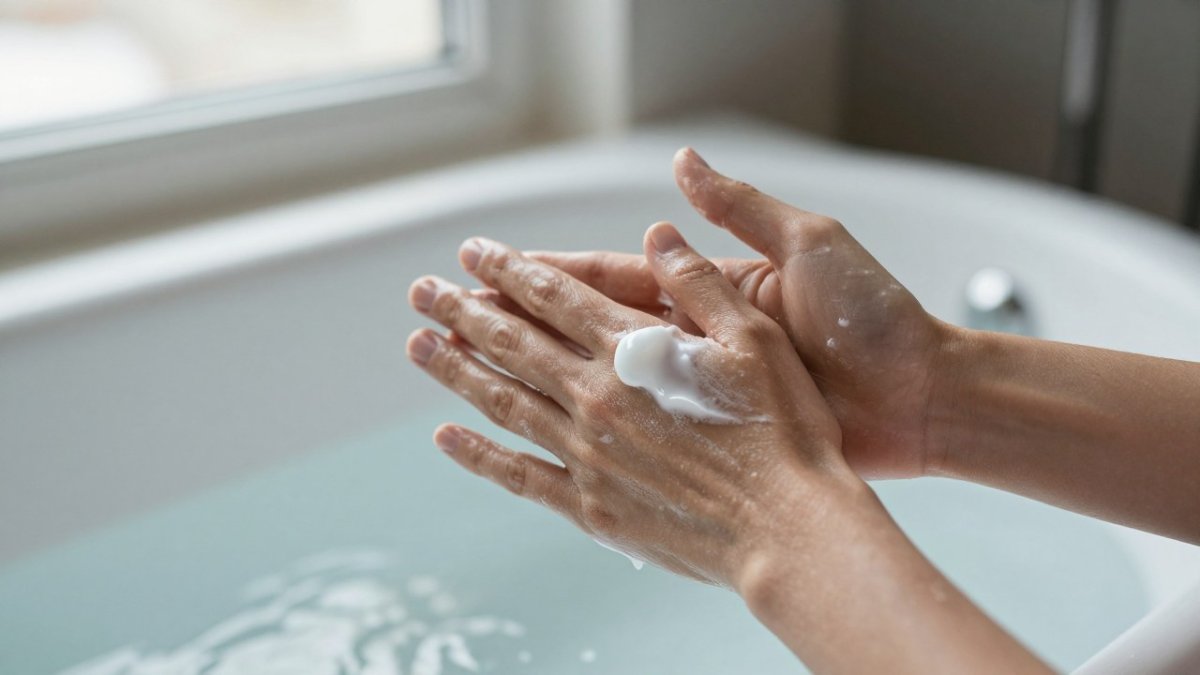
- Morning: Gentle lukewarm rinse, then a light cream on the face and body. If you use a prescribed topical treatment, apply it first, wait a few minutes, then apply moisturizer over the top unless your clinician advises otherwise.
- After each hand wash: A thin layer of cream on the hands, then an ointment on the knuckles and any cracked areas.
- Evening, after a short lukewarm bath: Pat skin dry and apply a thicker cream or ointment to problem areas within three minutes, while the skin is still slightly damp. This is the single most important step for locking in hydration.
- Throughout the day: Use a humidifier in heated rooms to add moisture to the air, and reapply cream to hands after washing or after coming in from the cold.
Layering order matters. The general pattern is: prescribed treatment first (if any), then moisturizer, then an occlusive ointment on the driest or most exposed areas. Wait a few minutes between layers so each product can absorb. If you apply ointment first, the treatment may not reach the skin as effectively.
How the routine changes by flare severity.
- Mild dryness: A lotion or light cream twice daily is often enough, plus a humidifier in heated rooms.
- Moderate flare with itching and redness: Switch to a cream for the body and an ointment at night on the worst patches. Keep baths short and lukewarm, and avoid scented soaps.
- Cracked, weeping or very sore skin: Use an ointment on the affected areas, keep the skin clean and covered, and see a clinician if there is oozing, warmth, spreading redness or fever, as these can signal infection.
What to avoid. Hot showers, long baths, scented soaps, and wool worn directly against the skin can all worsen winter flares. Wear soft cotton layers under wool, and keep showers short and water lukewarm.
Watch out: Applying moisturizer to skin that is still wet from a bath is fine, but applying it to skin that is dripping wet can dilute the product and make it less effective. Pat dry first, then apply within three minutes.
Track what works. Keep a simple record of which product you used, where, and how often you reapplied. Bring that record to your dermatologist, it is more useful than trying to remember which tub helped during a flare.
Safety Limits, Hydrocortisone and When to See a Doctor
Over-the-counter hydrocortisone is a common option for short-term flare control, usually low strength and for limited periods. Do not use it continuously on large areas or on the face without advice, because prolonged use can thin the skin.
See a doctor or dermatologist if itching disrupts sleep, if skin becomes infected (oozing, warmth, spreading redness or fever), or if moisturizers and short-term treatment no longer help after a couple of weeks. Anyone with a condition such as chronic pain, arthritis or a skin infection should speak to a clinician before relying on a topical product.
Booking a Skin Consultation or Choosing Your Winter Moisturizer
Start with a thick, fragrance-free cream for the body, a gentle option for the face, and an ointment for cracked areas. Track which products work over a few weeks, and bring that record to your dermatologist. For personal guidance on your winter routine, consult your dermatologist or healthcare provider.
Mamatuziosoil creates natural skincare for people with sensitive, dry and flare-prone skin. Our Pain Relief Ointment and skin conditioners are designed for everyday winter care, and our team can help you choose the right format for your skin.
Frequently Asked Questions
What is the best cream for eczema flare-ups in winter?
The best eczema cream for winter depends on how dry and how inflamed the skin is. Thicker creams and ointments contain more oil than lotions. Check ingredients, fragrance-free labelling and your own skin's response before committing to one product.
Is cream or ointment better for winter eczema?
Ointments generally contain the most oil and form the strongest barrier against cold, dry air, so they are often preferred for very dry or cracked patches, including on the hands. Creams contain more water than ointments and feel less greasy, which many people find easier for daytime use or for the face. Lotions contain the most water and are usually the lightest option, often less suited to severe winter dryness. Many people use an ointment at night and a cream during the day.
What is the best moisturizer for eczema on the face?
Facial skin is thinner and more reactive than body skin, so look for a fragrance-free moisturizer that is labelled suitable for sensitive or eczema-prone skin. A cream format is often a good middle ground between hydration and comfort on the face. Apply it to slightly damp skin after cleansing, and avoid products that sting or cause redness. If facial eczema does not settle within a few days of consistent use, speak to a doctor or dermatologist rather than switching products repeatedly.
When should I see a doctor about a winter eczema flare-up?
See a doctor if a flare-up does not improve after consistent moisturizing and any over-the-counter treatment for about a week, if the skin becomes weeping, crusted or infected, if the itch disrupts sleep, or if the eczema spreads or affects the eyes. Anyone using hydrocortisone on the face or for long periods should follow the label directions or ask a pharmacist first. For current product prices, visit the Mamatuziosoil website or request a quote.