 Comparison
Why Natural Eczema Creams Cost More: The Real Price Drivers
Last Updated: November 12, 2026
Quick Summary
Natural eczema creams cost more because raw ingredient sourcing, dermatological and stability testing, preservation, and small production scale all carry real costs that mass-market drugstore tubs avoid. These costs explain the price, not the performance, so a high price tag is not proof of clinical efficacy. Pay for the barrier-supporting formula, not the front label.
- Read the first five ingredients, not the last five, to see where the money went.
- Calculate cost per application by dividing jar price by full-body applications it holds.
- Failed-product costs are the most underestimated line item in eczema budgets.
- Water-free balms like melted shea butter with carrier oil need no preservative.
- Compare any natural cream against a plain fragrance-free drugstore moisturizer on cost per application.
Table of Contents
- Why Natural Eczema Creams Cost More Than Drugstore Tubs
- What the Price Tag Actually Covers
- Eczema Cream Ingredients: Where the Money Goes
- Natural vs Synthetic: A Side-by-Side Comparison
- Finding the Best Cream for Eczema Itching Without Overspending
- The True Cost of Managing Eczema: Prescriptions, Copays and Hidden Expenses
- Homemade Natural Eczema Cream: Does DIY Actually Save Money?
- Choosing a Natural Eczema Cream That Earns Its Price
- Frequently Asked Questions
Why Natural Eczema Creams Cost More Than Drugstore Tubs
Natural eczema creams cost more because their ingredients, testing, and sourcing carry real costs that mass-market drugstore tubs avoid. This guide from Mamatuziosoil breaks down where your money goes, which premiums are worth paying, and how to cut costs without settling for a formula that irritates your skin.
What the Price Tag Actually Covers
Every cream price is a stack of costs, and only one layer touches your skin. The rest is packaging, testing, distribution, and marketing.
The main cost drivers in a natural eczema cream are:
-
Raw ingredient sourcing. Cold-pressed oils, unrefined shea butter, and mineral clays cost more per kilogram than synthetic emollients, and harvests vary by season.
-
Testing and compliance. Dermatological testing, stability testing, and labeling compliance are fixed costs per formula, not per jar.
-
Preservation. Preservative-free or naturally preserved formulas often need more expensive packaging to stay stable.
-
Scale. A brand making thousands of jars pays more per unit than a brand making millions.
None of these guarantee a better cream. They explain the price, not the performance. A high price tag is not proof of clinical efficacy.
Eczema Cream Ingredients: Where the Money Goes
Ingredient lists are where natural eczema creams justify their cost, and where some quietly fail to. The expensive part of a good formula is not the exotic botanical on the front label.
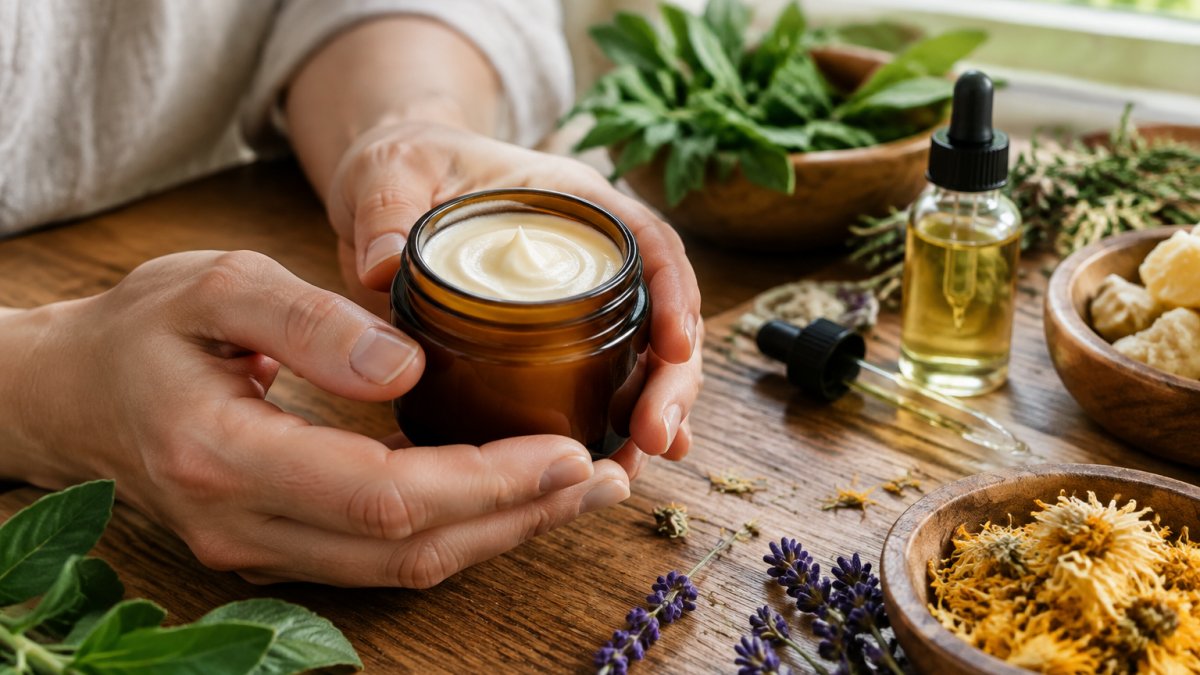
Sourcing, Potency and the 'Natural' Marketing Premium
Sourcing transparency is the angle most buyers never check. Unrefined shea butter, cold-pressed oils, and mineral-rich clays vary in potency by origin and processing, and reputable makers pay more for consistent, traceable supply.
The "natural" marketing premium is the other half of the story. A botanical extract added at a token amount can still earn a front-label claim, while the formula does the actual work with cheap base ingredients. Read the first five ingredients, not the last five.
A mineral-rich clay product, for example, earns its place when the mineral content is the point, not a garnish. You can see how that looks in practice on our Oceanic Glacial Clay 100ml page, which explains what the clay is and what it does for rehydration and skin tone.
Natural vs Synthetic: A Side-by-Side Comparison
The table below shows where each earns its cost.
| Factor | Natural creams | Synthetic drugstore creams |
|---|---|---|
| Cost per jar | Higher | Lower |
| Ingredient consistency | Varies by harvest | Highly standardized |
| Barrier repair actives | Plant oils, butters, clays | Ceramides, petrolatum, glycerin |
| Allergy risk | Botanical allergens possible | Fewer plant allergens, more preservatives |
| Testing and certification | Often third-party audited | Standardized safety testing |
| Best for | Readers avoiding synthetics | Readers on a tight budget |
Barrier Repair, Emollients and Transepidermal Water Loss
Barrier repair is the mechanism that decides whether a cream works, natural or not. Emollients soften and fill the gaps between skin cells, while occlusives slow transebral water loss, the steady evaporation of moisture through a damaged barrier.
Finding the Best Cream for Eczema Itching Without Overspending
The best cream for eczema itching is the one that calms irritation without triggering it, and that you can afford to apply generously every day. A cream you use twice daily will outperform an expensive jar you ration.
Consider the following before you buy:
-
Fragrance-free and hypoallergenic claims stated clearly on the label
-
First five ingredients include an emollient or occlusive, not just water and alcohol
-
Preservative system disclosed, especially if you have reacted to preservatives before
-
Cost per application calculated, not just cost per jar
-
Return policy or sample size available before committing to a full tub
Cost-Per-Application: The Number Most Shoppers Skip
Cost-per-application is the price of the jar divided by the number of full-body applications it holds. It is the single most useful number in this category, and almost nobody calculates it.
A large tub applied twice daily for a month can cost less per application than a small boutique jar used sparingly. Do the math on the size you will actually use. If a formula costs more per application, it needs to reduce how often you need it, or soothe better, to justify the difference.
The True Cost of Managing Eczema: Prescriptions, Copays and Hidden Expenses
The shelf price of a cream is only one line item in the real cost of managing eczema. Prescription topical corticosteroids, repeat dermatologist visits, copays, and the trial-and-error of products that did not work all add up.
A useful way to see the full picture is to separate costs into four buckets:
- Direct treatment costs. Prescription copays for topical corticosteroids, calcineurin inhibitors, or biologics; over-the-counter moisturizers; antihistamines; and phototherapy sessions.
- Failed-product costs. Multiple tubes of cream that irritated your skin and went in the bin. This is the most underestimated line item, because each failed trial costs both money and a week or two of skin recovery.
- Access costs. Dermatologist visits, travel, parking, and lost work time. For caregivers, add the same for a child's appointments.
- Household costs. Laundry and bedding changes during bad patches, plus fragrance-free detergents and soft bedding that reduce irritation.
Most practitioners find that the failed-product bucket is where budgets quietly leak. A cream that costs more per jar but actually soothes can be cheaper overall than three cheaper jars that each trigger a flare.
Insurance, Copay Assistance and Patient Assistance Programs
Insurance coverage for eczema treatment varies by plan and country. Check with your insurer or national health service about what is covered. That does not mean you have no options.
- Check your formulary first. Prescription topical corticosteroids and non-steroidal options are often tiered differently, and a generic corticosteroid may cost far less than a brand-name biologic. Ask your insurer or national health service which tier your treatment falls into.
- Copay assistance programs. Many manufacturers of prescription eczema treatments offer copay cards or assistance programs that reduce out-of-pocket costs for eligible patients. These are typically listed on the manufacturer's own website and require enrollment.
- Patient assistance programs. Nonprofit and manufacturer-run programs can help uninsured or underinsured patients access prescription treatments. Eligibility usually depends on income and insurance status, so check the specific program's criteria.
- Tax and flexible spending accounts. In some countries, prescription skincare and medically necessary moisturizers may be eligible for flexible spending or health savings accounts. Keep receipts and check local rules.
Watch out: assistance programs change eligibility and funding frequently, so confirm current terms directly with the program before relying on them for a treatment plan. For the rules that apply where you live, check your national health service or insurance regulator directly.
The consumer-advocate takeaway is simple: price the whole regimen, not the jar.
Homemade Natural Eczema Cream: Does DIY Actually Save Money?
A homemade natural eczema cream can save money on ingredients, but it carries risks that offset the savings. Raw oils and butters are cheap per gram, yet a safe DIY formula needs preservatives, accurate measurement, and sterile equipment.
Where DIY genuinely helps is in simple, water-free balms: melted shea butter with a carrier oil, no water, no preservative needed. Where it fails is in anything with water, aloe, or botanical infusions, which spoil fast and can irritate broken skin.
If you want the benefits of a formulated natural cream without the lab work, a professionally made product is the lower-risk spend. Our Nature's Touch Shea Butter with CBD combines shea butter with extra virgin olive oil and CBD for an added layer of protection, and it is a good example of a formula built around barrier support rather than a long botanical list.
Choosing a Natural Eczema Cream That Earns Its Price
A natural eczema cream earns its price when its cost drivers match your needs: barrier-supporting ingredients high on the list, transparent sourcing, real dermatological testing, and a cost per application you can sustain.
Use this evaluation framework before you commit:
- Read the first five ingredients. The base that repairs the skin barrier should appear early. If water and alcohol lead and the botanical actives sit at the bottom, the premium is buying a label claim, not a barrier-supporting formula.
- Calculate cost per application. Divide the jar price by the number of full-body applications it holds. If a formula costs more per application, it needs to reduce how often you need it, or soothe better, to justify the difference.
- Check the testing and certification claims. National Eczema Association acceptance or equivalent dermatological testing is a concrete signal. A brand that discloses its testing protocol is telling you where part of the premium went.
- Look for sourcing transparency. Reputable makers of unrefined shea butter, cold-pressed oils, and mineral clays pay more for consistent, traceable supply. If a brand cannot tell you where its key ingredient comes from, the premium may be marketing rather than sourcing.
- Confirm the preservative system. Preservative-free or naturally preserved formulas often need more expensive packaging to stay stable. If you have reacted to preservatives before, this is a safety question, not just a cost one.
- Test before committing. A return policy or sample size lets you verify the cream soothes rather than irritates before you buy a full tub.
A useful benchmark is to compare any natural cream against a plain, fragrance-free drugstore moisturizer on cost per application and barrier-support ingredients. If you want to see how a natural conditioner performs on real skin before buying, our testimonials and textimonials page collects customer accounts. And if you are comparing formulas, our tusc natural skin conditioner is built to soften and condition skin with carefully chosen natural ingredients, which makes it a fair benchmark for what a natural formula should deliver.
Mamatuziosoil offers 100% natural, animal cruelty-free skincare for people and pets, including professional-grade options.
The challenge is not finding a natural cream; it is finding one whose price reflects what is actually in the jar.
Frequently Asked Questions
Why are natural eczema creams more expensive than regular moisturizers?
The gap comes down to production economics. Botanical ingredients are harvested in smaller volumes, cost more per kilogram and lose potency faster, so they need fresher stock and tighter storage. Certification for organic status, dermatological testing and preservative-free formulation all add cost that a standard drugstore lotion avoids through synthetic stabilizers and long shelf life. You are paying for sourcing, testing and shorter production runs, not just the label.
Do natural eczema creams work as well as conventional ones?
It depends on the ingredients and the person. Colloidal oatmeal and ceramide-rich formulas have solid evidence behind them for soothing and barrier repair, while some botanical extracts have less clinical data. Look for fragrance-free products with a short ingredient list where possible. If your skin is highly reactive, patch-test first and keep a prescription treatment on hand for flare-up management.
How can I compare the cost per use of eczema creams?
Divide the pack price by the number of applications you realistically get from it. A thick emollient used twice daily on both arms may last three weeks, while a lighter lotion runs out in ten days. Factor in how much you apply per dose and whether the product needs frequent reapplication. A cream that costs more upfront but needs one application per day can work out cheaper than a budget option you reapply four times.
Is a homemade natural eczema cream cheaper than buying one?
Sometimes, but the savings are smaller than they look. You still buy carrier oils, butters, emulsifiers and preservatives, and small batches mean you pay retail for every ingredient. Without preservatives, water-based DIY creams spoil within days, so most homemade versions are oil-based balms. Getting the texture and barrier repair right takes trial and error,