 How-to
How to Choose the Right Arthritis Hand Brace for Daily Support
An- Algea works wonderfully. https://mamatuziosoil.com/products/An-Algea-100mL-p630244907
Last Updated: November 7, 2026
Quick Summary
Choosing the right arthritis hand brace starts with identifying which joint hurts: the thumb base, wrist, or fingers, since each needs a different design. Match the support level to your symptoms, measure your wrist circumference and palm width against the maker's size chart, and step down to lighter support as symptoms settle.
- Thumb-base arthritis affects the CMC joint, making pinching and gripping painful.
- Measure wrist circumference and palm width in the morning before swelling builds.
- If between two sizes, choose the larger and tighten with straps.
- Start night wear with 30 minutes and add an hour each night.
- Replace a brace when straps stretch, stays bend, or seams fray.
Table of Contents
- Start With the Joint: A Hand, Wrist, or Thumb Decision Guide
- Matching Support to Pain, Swelling, Weakness, and Instability
- Brace and Splint Styles: Sleeves, Rigid Braces, and Resting Splints Compared
- How to Find the Best Hand Brace for Arthritis by Fit and Sizing
- Soft Thumb Brace for Arthritis: When Flexible Support Is Enough
- Arthritis Hand Brace for Sleeping: Night Wear and Break-In Schedules
- Brace Care, Cleaning, and When to Replace It
- When a Brace Is Not Enough: Professional Assessment and Natural Support
- Frequently Asked Questions
Start With the Joint: A Hand, Wrist, or Thumb Decision Guide
Choosing the right arthritis hand brace starts with one question: which joint hurts?
An arthritis hand brace is a wearable support that stabilizes, protects, or rests painful joints in the hand and wrist. It works by limiting unwanted movement while keeping useful motion where possible.
The three main targets are the thumb base, the wrist, and the fingers. Each needs a different design.
Thumb Braces and Thumb-Base Arthritis (CMC Joint)
Thumb-base arthritis affects the CMC joint, where the thumb meets the wrist. It makes pinching and gripping painful, from opening jars to turning keys. A thumb brace supports this joint and limits the pinch motion that flares pain.
Look for a brace that wraps the thumb and anchors around the wrist. Soft thumb braces suit mild pain. Rigid ones help when the joint feels unstable.
Wrist Braces and Wrist Arthritis
Wrist arthritis causes aching, stiffness, and swelling at the wrist joint. A wrist brace holds the joint in a neutral position and limits bending. This eases strain during typing, lifting, or housework.
Rigid wrist splints work well during flares. Softer sleeves suit mild symptoms and light daily support.
Hand Braces for Arthritis in Fingers
Finger arthritis affects the knuckles and joints of the fingers. A hand brace for arthritis in fingers often uses small splints or soft wraps to keep fingers aligned. Resting hand splints support the whole hand and fingers during rest.
Finger supports help most with stiffness and deformity prevention. They are less useful for heavy gripping.
Affected Joint | Best Brace Type | Main Job |
|---|---|---|
Thumb base (CMC) | Thumb brace or thumb splint | Limits pinch, supports thumb |
Wrist | Wrist brace or wrist sleeve | Holds wrist neutral, limits bending |
Fingers | Finger splint or resting hand splint | Aligns fingers, rests the hand |
Matching Support to Pain, Swelling, Weakness, and Instability
The right level of support depends on your symptoms, not just the joint. Match the brace to what your hand is actually doing, and treat the choice as a temporary setting you can step up or down as symptoms change.
A simple symptom-to-support decision path
- Identify the dominant problem. Is it pain with pinching, swelling, weakness when gripping, a joint that feels loose, or stiffness after rest?
- Match the support level. Use the table below to pick a starting point.
- Test for one week. Wear the brace for the activities that provoke symptoms and note whether pain, swelling, or stability improves.
- Step up or down. If symptoms persist, move to firmer support. If symptoms settle, move to lighter support so muscles keep working.
Dominant symptom | Starting support | What it does | When to step up |
|---|---|---|---|
Mild pain with activity | Soft sleeve or soft thumb brace | Light compression and warmth | Pain persists or joint feels unstable |
Swelling | Compression sleeve | Gentle compression | Swelling does not settle or skin breaks down |
Weakness when gripping | Brace with stays or straps | Adds stability for grip | Grip remains weak or painful |
Instability or giving way | Rigid brace or splint | Limits unwanted movement | Instability continues despite rigid support |
Stiffness after rest | Resting splint at night | Rests and aligns the joint | Stiffness persists into the day |
The trade-off of over-bracing
A common mistake is wearing the most rigid brace all day. That can weaken muscles over time and make the joint feel less stable when the brace comes off.
Watch out: if a rigid brace causes numbness, cold fingers, or skin irritation, do not simply wear it looser and hope for the best. Check the fit and the stay placement, and consider a different style if the problem continues.
When symptoms do not fit a single category
Many people have more than one problem at once, such as thumb-base pain plus wrist instability. In that case, choose the brace that addresses the joint causing the most limitation, and add a second support only if a clinician or hand therapist recommends it. Stacking two braces on the same area usually reduces fit and comfort without adding much stability.
Brace and Splint Styles: Sleeves, Rigid Braces, and Resting Splints Compared
Brace styles range from soft sleeves to rigid splints, and each has a clear job.
Wrist sleeves offer light compression and warmth. They suit mild stiffness and light joint support.
Rigid braces use metal or plastic stays to limit movement.
Resting hand splints hold the hand and fingers in a supported position.
Soft thumb braces wrap the thumb base with flexible support.
- Sleeve: light control, good for mild symptoms
- Rigid brace: strong stabilization, good for flares and instability
- Resting splint: full-hand support, good for night use
- Soft thumb brace: flexible thumb support, good for mild CMC pain
How to Find the Best Hand Brace for Arthritis by Fit and Sizing
Finding the best hand brace for arthritis comes down to fit. A brace that is too tight restricts blood flow; one that is too loose slides and does nothing. Poor fit is a common reason people stop wearing a brace after a few days.
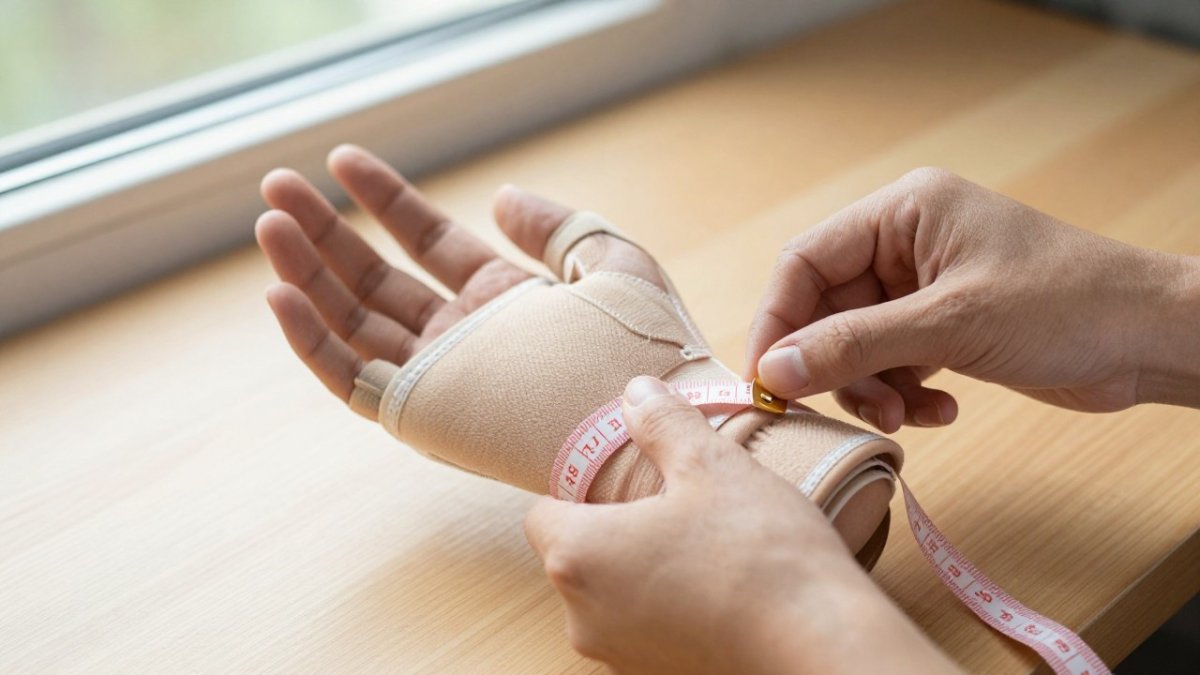
Measure before you buy
Use a flexible tape, not a rigid ruler, and measure in the morning before swelling builds during the day. Take two numbers:
- Wrist circumference: wrap the tape just below the wrist crease, snug but not tight.
- Palm width: measure across the widest part of the palm, just below the knuckles.
Compare those numbers to the maker's size chart, not your glove size. Glove sizes vary by brand and do not reflect wrist or palm dimensions. If you fall between two sizes, choose the larger size and use the straps to tighten, because a brace that is too small cannot be loosened enough to restore circulation.
Run these fit checks
- Straps close without pinching or leaving deep marks
- You can slide one finger under the edge of the brace
- Fingers stay warm and do not tingle
- The brace stays put during a light grip test (squeeze a rolled sock)
- Joints sit in a neutral, comfortable position, not bent forcefully
Recognize excessive pressure
Watch out: numbness, tingling, cold fingers, or skin that turns pale or bluish mean the brace is too tight. Loosen it or size up. Red marks that fade within a few minutes are normal; marks that persist or feel sore are not. If you develop a rash or broken skin under the brace, stop wearing it until the skin heals and check whether the material or a seam is the cause.
Check fit again after a week
Swelling changes. A brace that fit well during a flare may be loose once swelling settles, and a brace that felt fine in the morning may feel tight by evening. Recheck the finger-slide test and the strap tension after the first week, and adjust or resize if needed. A brace that no longer holds position is not protecting the joint, even if it still looks intact.
Soft Thumb Brace for Arthritis: When Flexible Support Is Enough
A soft thumb brace for arthritis works best for mild to moderate thumb-base pain. It gives flexible support without locking the thumb completely.
These braces suit people who still need grip and dexterity for daily activities. Think cooking, typing, or gardening. Flexible support eases strain on the CMC joint without the bulk of a rigid splint.
Choose a soft brace when:
- Pain is mild or occasional
- You need to keep using your thumb
- Rigid braces feel too restrictive
- You want light support for short tasks
Step up to a rigid thumb splint if the joint feels unstable or pain spikes with pinching.
Arthritis Hand Brace for Sleeping: Night Wear and Break-In Schedules
An arthritis hand brace for sleeping keeps the hand supported and still overnight. Night bracing can keep the hand supported and still during rest.
Resting splints are a common choice for sleep. They hold the wrist and fingers in a relaxed position.
Break in slowly:
- Start with 30 minutes in the evening.
- Add an hour each night as comfort allows.
- Aim for full overnight wear within one to two weeks.
- Stop and adjust if you wake with numbness.
A wear schedule matters as much as the brace itself. Many people find short daytime sessions plus night wear works best.
Brace Care, Cleaning, and When to Replace It
Keeping a brace clean helps maintain hygiene and skin comfort.
- Wash fabric braces by hand in mild soap and cool water
- Air dry fully before wearing again
- Wipe rigid plastic and metal stays with a damp cloth
- Check straps and seams for wear each week
Replace a brace when straps stretch out, stays bend, or seams fray. A loose brace no longer stabilizes the joint. Most braces need replacing once they stop holding position, not on a fixed schedule.
Watch out: never share a brace, and keep the skin under it dry to avoid irritation.
When a Brace Is Not Enough: Professional Assessment and Natural Support
Some hand pain needs more than a brace. See a doctor or hand therapist if pain keeps getting worse, if the joint looks deformed, or if you lose feeling in your fingers.
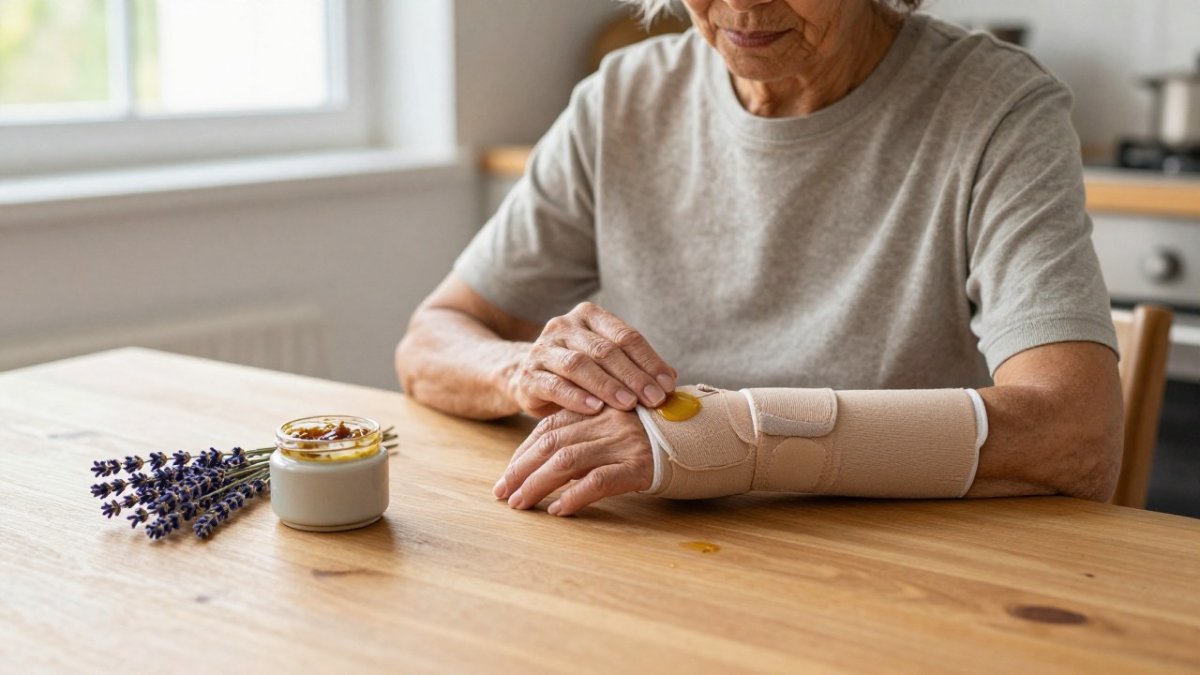
Bracing works best combined with other strategies: gentle range-of-motion exercise, pacing daily tasks, and topical support for sore joints. For natural joint support alongside your brace, our An-Algea pain relief ointment is a hand-crafted topical option. If you want to try a smaller size first, the 50mL An-Algea ointment lets you test it. For ongoing use, the 250mL CBD pain relief ointment suits regular application.
Mamatuziosoil offers 100% natural, animal cruelty-free products. A brace protects the joint, and natural topical support may complement it.
The right brace should feel supportive, not restrictive, and it should match the joint that actually hurts.
Frequently Asked Questions
How many hours a day should you wear an arthritis hand brace?
There is no single number that suits everyone. Many people start with one to two hours during demanding tasks and build up gradually, while resting splints are often worn overnight. The right schedule depends on your pain level, swelling, and how much movement restriction you need. Take the brace off if you notice numbness, tingling, or skin irritation, and ask a healthcare professional if you are unsure how long to wear it.
Can you wear an arthritis hand brace while sleeping?
Yes, an arthritis hand brace for sleeping is common, especially resting splints that hold the hand in a neutral position to reduce morning stiffness. Choose a breathable, well-fitted design without tight straps that restrict circulation. Check your skin before bed and in the morning for redness or pressure marks, and loosen or remove the brace if any appear.
How should an arthritis hand brace fit?
A well-fitted arthritis hand brace should feel supportive but not painful. Measure your wrist and palm circumference and follow the maker's sizing chart rather than guessing. You should be able to slide one finger under the straps, move your fingers freely unless the design intentionally restricts them, and wear it for an hour without numbness or red pressure lines. Recheck the fit as swelling changes through the day.
When should I ask a healthcare professional about a hand brace?
Speak to a doctor or hand therapist if you have sudden severe pain, numbness, tingling, or weakness, or if the brace makes symptoms worse. Professional assessment matters after surgery, injury, or a new diagnosis, and when you need a custom resting splint. A clinician can confirm which joint is affected and whether a soft thumb brace for arthritis or a more rigid design is appropriate for your situation.