 Ultimate guide
How to Manage Arthritis Hand Pain: Daily Relief Guide
Table of Contents
- Understanding Arthritis Hand Pain: Types and Symptoms
- Natural Remedies for Hand Arthritis: Oils, Clays, and Topicals
- Hand Exercises for Arthritis Relief: A Daily Routine
- How to Reduce Joint Inflammation Naturally Through Diet and Lifestyle
- Ergonomic Workspace and Tool Modifications for Daily Tasks
- Splints, Braces, and Assistive Devices for Joint Protection
- When to See a Doctor and Medical Treatment Options
- Conclusion: Building a Daily Management Plan
- Frequently Asked Questions
Last Updated: October 3, 2026
Understanding Arthritis Hand Pain: Types and Symptoms
Learning how to manage arthritis hand pain starts with knowing which type you're dealing with, because osteoarthritis and rheumatoid arthritis damage the joints in fundamentally different ways. Arthritis hand pain is the discomfort, stiffness, and loss of function caused by inflammation or cartilage breakdown in the small joints of the fingers, thumb, and wrist.
Osteoarthritis vs. Rheumatoid Arthritis in the Hands
Osteoarthritis is the wear-and-tear form. Cartilage degrades over years of use, and the body responds by forming bone spurs around the joint edges. It typically settles into the base of the thumb, the fingertips, and the joint nearest the nail.
Rheumatoid arthritis is an autoimmune condition. The Arthritis Foundation's overview of hand arthritis explains how the two conditions require different treatment paths.
| Feature | Osteoarthritis | Rheumatoid Arthritis |
|---|---|---|
| Cause | Cartilage wear and tear | Autoimmune attack on joint lining |
| Onset | Gradual, often after 50 | Can start at any age, often 30-60 |
| Pattern | One or a few joints | Usually both hands, symmetrical |
| Morning stiffness | Under 30 minutes | Often over an hour |
| Key sign | Bone spurs, hard nodes | Soft swelling, warmth, redness |
Common Symptoms: Stiffness, Swelling, and Grip Weakness
Stiffness is usually worst in the morning or after sitting still. Swelling and tenderness follow flare-ups, and grip strength drops as the joint capsule tightens. Some people notice numbness or tingling when swollen tissue presses on nerves near the wrist. Reduced range of motion and hand dexterity make buttons, jar lids, and keys genuinely difficult.
Natural Remedies for Hand Arthritis: Oils, Clays, and Topicals
Natural remedies for hand arthritis work best as part of a broader routine, not as a replacement for medical care. They ease surface pain, improve circulation, and keep skin resilient over joints that ache. Here's what we recommend and why.
Massage Oils and Paraffin Wax Baths
A paraffin wax bath surrounds the hand in gentle, even heat that loosens stiff fingers before exercise. Warm massage oil does something similar while letting you work the soft tissue around the joint. Use slow, circular strokes toward the wrist to support circulation, and avoid pressing directly on a swollen joint. A mineral-rich massage oil absorbs well and leaves skin conditioned rather than greasy.
Topical Analgesics and Anti-Inflammatory Ointments
Topical analgesics, including creams containing non-steroidal anti-inflammatory drugs, deliver relief close to the joint with fewer systemic effects than pills. Natural anti-inflammatory ointments rely on plant and mineral ingredients instead. The NHS guidance on osteoarthritis treatment notes that topical NSAIDs can be effective for hand osteoarthritis and are often tried before oral medication.
Hand Exercises for Arthritis Relief: A Daily Routine
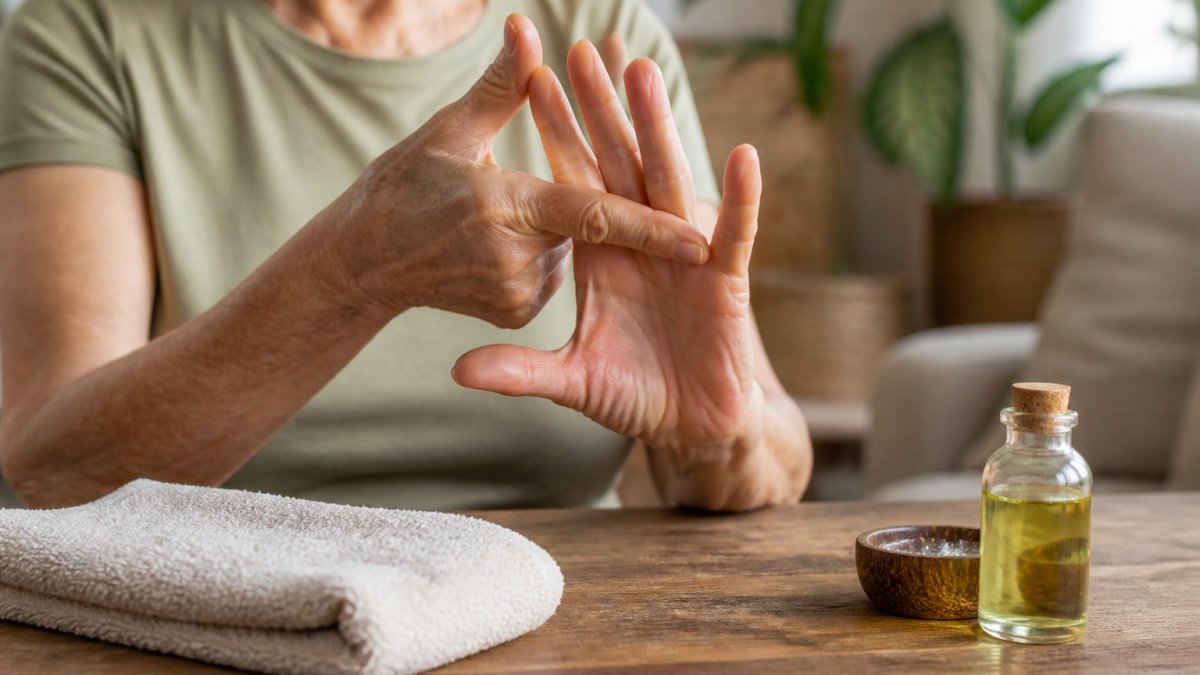
Hand exercises for arthritis relief should be gentle, frequent, and never painful. The goal is joint mobility and grip strength, not fatigue.
The Core Routine
Do this once or twice daily. Warm up with heat first (a paraffin bath or warm towel for 5-10 minutes), and cool the hands afterward if they feel hot or swollen.
- Finger lifts: Place your palm flat on a table. Lift each finger, one at a time, and lower it slowly. Repeat 8 times per hand. This isolates the extensor tendons without loading the joint.
- Fist and release: Curl your fingers into a loose fist, hold for 5 seconds, then spread them wide. Repeat 10 times. Keep the fist loose, a tight fist strains the knuckles.
- Thumb touches: Touch your thumb to each fingertip in turn, forming an "O." Repeat 10 times per hand. This maintains opposition, the pinch motion used for buttons and keys.
- Tendon glides: Move through five hand positions, straight fingers, hook fist, full fist, tabletop, and straight fist, slowly. Repeat 5 cycles. Tendon glides reduce stiffness in the flexor tendons and are especially helpful for rheumatoid arthritis.
- Wrist curls: With a light weight (1-2 lbs) or a small can, curl the wrist up and down 10 times. Stop if you feel sharp pain.
- Towel squeeze: Roll a small towel and squeeze it for 5 seconds, then release. Repeat 10 times. This builds grip strength without the repetitive strain of a tennis ball.
How to Progress Safely
Start with the range of motion moves (finger lifts, thumb touches, tendon glides) for the first two weeks. Add the strengthening moves (wrist curls, towel squeeze) only when the range of motion moves feel comfortable. A common pattern is to increase repetitions by two per week, up to a maximum of 15, then add light resistance.
Modifications for OA vs. RA
- Osteoarthritis: Focus on the thumb base and fingertip joints. Avoid deep bending of the thumb, which can aggravate basal joint arthritis. Use a thumb spica splint during strengthening if the base of the thumb aches.
- Rheumatoid arthritis: Avoid tight fists and strong pinches during flares. Tendon glides and gentle range of motion are safer than resistance work when joints are swollen. If a joint is hot and swollen, skip strengthening entirely that day.
When to Stop
Stop any movement that sharpens pain, causes numbness, or leaves the joint more swollen an hour later. A physical or occupational therapist can tailor the routine to your specific joints and teach you joint protection techniques to use during the exercises.
How to Reduce Joint Inflammation Naturally Through Diet and Lifestyle
Learning how to reduce joint inflammation naturally comes down to reducing what feeds it and adding what calms it. Chronic inflammation responds to diet, sleep, stress, and movement, though none of these replaces prescribed treatment.
- Eat more anti-inflammatory foods: fatty fish, olive oil, walnuts, leafy greens, and berries.
- Cut back on what aggravates: refined sugar, processed meats, and excess alcohol.
- Protect your sleep: poor sleep raises inflammatory markers and lowers pain tolerance.
Dietary changes take weeks to show benefit, so treat them as a long game. If you're on medication, talk to your doctor before making major changes.
Ergonomic Workspace and Tool Modifications for Daily Tasks
Ergonomics is where most arthritis advice stops being useful and starts being practical. Repetitive motion is a major driver of hand pain, so the fix is to change how you grip, reach, and load the joint.
- Swap round pen barrels for thick, soft-grip versions.
- Use built-up handles on cutlery, toothbrushes, and kitchen tools.
- Replace jar lids with a lever-style opener.
Splints, Braces, and Assistive Devices for Joint Protection
Splinting supports a joint, reduces strain, and gives inflamed tissue a chance to settle. But the right splint depends on which joint is affected and whether you have osteoarthritis or rheumatoid arthritis. A hand therapist (occupational therapist) can fit a custom splint, but many people start with an over-the-counter option.
Types of Splints and When to Wear Them
- Thumb spica splint: Supports the base of the thumb (the CMC joint), the most common site of osteoarthritis hand pain. Wear it during pinch-heavy tasks like writing, opening jars, or using scissors. A common pattern is to wear it during the day for 2-4 weeks, then taper to only during flares.
- Finger splints (mallet splints, PIP/DIP splints): Used for finger joint arthritis or after a tendon injury. They keep the joint straight or slightly bent to rest the cartilage.
- Resting hand splint: A nighttime splint that supports the wrist and fingers in a neutral position. It is often recommended for rheumatoid arthritis to reduce morning stiffness. Wear it at night only, and remove it during the day to keep muscles working.
Fitting and Wear Schedule
A splint should feel supportive, not tight. You should be able to slip a finger under the strap. If you feel numbness, tingling, or skin irritation, remove it and check with your therapist. Most splints are worn for 2-4 weeks during a flare, then as needed. Do not wear a splint 24/7, muscles weaken without use.
Assistive Devices That Restore Independence
This is where most arthritis advice stops being useful and starts being practical. The right tool reduces the force your hands must generate. Here are specific devices that occupational therapists commonly recommend:
- Jar openers: A lever-style under-cabinet jar opener or a silicone jar grip. The lever style lets you use your whole arm instead of a pinch grip.
- Button hooks: A looped wire tool that pulls buttons through buttonholes without fine pinch. Useful for shirts and pants.
- Key turners: A large, easy-grip key holder that gives leverage to turn a key in a stiff lock.
Joint Protection Techniques
Devices only go so far. Joint protection techniques matter as much:
- Use both hands to lift a pot or pan, not one.
- Slide objects along the counter instead of lifting them.
- Avoid a tight pinch grip, use the whole hand or a tool.
When to See a Doctor and Medical Treatment Options
See a doctor when pain persists despite home care, when swelling doesn't settle, or when you notice joint deformity, numbness, or tingling. Early assessment matters most with suspected rheumatoid arthritis, because treatment started early prevents lasting damage.
An orthopedic specialist or rheumatologist may recommend:
- Corticosteroid injections to calm a severely inflamed joint.
- Disease-modifying drugs for inflammatory arthritis.
- Physical therapy and occupational therapy to rebuild strength and function.
Conservative treatment handles most cases, but it works best when started before joint damage accumulates. The CDC's page on arthritis management outlines the value of combining medical care with self-management programs.
Conclusion: Building a Daily Management Plan
Managing arthritis hand pain is a daily practice, not a one-time fix. Combine gentle exercise, heat and cold therapy, topical relief, ergonomic adjustments, and medical care into a routine you can sustain through good days and flare-ups. The aim is staying independent and active, not chasing a cure.
Frequently Asked Questions
What is the fastest way to relieve arthritis pain in hands?
The fastest relief typically comes from a combination of heat therapy and topical analgesics. A warm paraffin wax bath or a 10-minute warm water soak can loosen stiff joints, followed by a gentle massage with an anti-inflammatory ointment. Cold therapy helps if your hands are swollen. Over-the-counter non-steroidal anti-inflammatory drugs can reduce pain quickly, but check with your doctor before regular use. For flare-ups, rest the hand and avoid repetitive motion until the sharp pain subsides.
What are some natural remedies for arthritis pain in the hands?
Natural remedies for hand arthritis include topical ointments, warm paraffin wax baths, and gentle massage with specialized oils. Glacial clay wraps can help reduce swelling. Dietary changes, such as increasing omega-3 fatty acids and reducing processed foods, may lower inflammation over time. Herbal supplements like turmeric and ginger have shown some anti-inflammatory benefits in studies. Always test a small area first and consult your doctor before combining natural remedies with prescription medications.
How to reduce inflammation in the hand joints naturally?
To reduce joint inflammation naturally, focus on three areas: diet, movement, and topical care. Eat anti-inflammatory foods like fatty fish, leafy greens, and berries while limiting sugar and refined carbohydrates. Perform range-of-motion exercises daily to keep synovial fluid moving. Apply cold therapy for acute swelling and heat for chronic stiffness. Massage oils and mineral-rich clays can support circulation and calm irritated tissue. Consistent activity modification, like using larger grips on tools, also prevents repetitive motion from triggering flare-ups.
Can massage oils help with chronic hand arthritis?
Yes, massage oils can help with chronic hand arthritis by improving circulation, reducing joint stiffness, and providing temporary pain relief. The act of massaging the hands also stimulates blood flow to the cartilage and surrounding tissues. Look for oils infused with natural anti-inflammatory ingredients. For best results, warm the oil slightly and massage in circular motions around each joint for 5 to 10 minutes. This works well as part of a morning routine to loosen stiffness or before bed to ease aching.
What daily habits worsen hand arthritis symptoms?
Several daily habits can worsen hand arthritis symptoms. Repetitive motion like typing without breaks, gripping small tools tightly, or knitting for hours can strain joints. Ignoring early signs of swelling and pushing through pain leads to more cartilage degradation. A diet high in processed foods and sugar promotes inflammation. Smoking reduces blood flow to connective tissues. Not using ergonomic aids, such as jar openers or thick pens, forces already tender joints to work harder. Breaking these habits can significantly reduce flare-up frequency.
Hand pain shouldn't decide what you can do with your hands. At Mamatuziosoil, we make 100% natural, cruelty-free massage oils, pain relief ointments, and mineral-rich glacial clays that support joint comfort and keep skin healthy through daily use. Our professional-grade formulas promote natural rehydration and replenish beneficial minerals, so relief and skin care happen together. Explore the Mamatuziosoil collection and build a routine that works for your hands.