 How-to
How Do Massage Therapists Manage Skin Irritation?
Last Updated: November 14, 2026
Quick Summary
To manage skin irritation, assess the skin before you touch, modify the session with gloves and fragrance-free products or postpone and refer if the skin is broken, spreading, or infected. Soothe irritated skin with a cool compress for ten minutes, then rebuild the barrier with gentle cleansing and an emollient applied within three minutes of drying.
- Wash with lukewarm water and mild soap, then dry hands completely, including between the fingers.
- Fragrance is the leading allergen in massage products, and unscented is not the same as fragrance-free.
- Patch test any new product on the inner forearm for 48 hours before using it on clients.
- Refer when irritation is spreading, weeping, painful, or does not improve within a week.
- Document session modifications in neutral language and avoid diagnostic terms in client records.
Table of Contents
- Recognizing Skin Irritation in Your Massage Practice
- Massage Therapist Contact Dermatitis: Causes and Prevention
- Common Allergens in Massage Products
- Massage Therapy Skin Conditions and Contraindications
- Skin Protection for Massage Therapists: A Step-by-Step Guide
- Choosing Products That Protect Your Skin Barrier
- When to Refer a Client to a Healthcare Professional
- Building a Skin-Safe Practice with Mamatuziosoil
- Frequently Asked Questions
Recognizing Skin Irritation in Your Massage Practice
Skin irritation is any visible or reported disruption of the skin barrier, ranging from mild redness to weeping rashes, and it changes how you approach a session. Early recognition is the first line of protection for both therapist and client. Catching irritation before it spreads keeps a treatment safe and stops a small problem from becoming a chronic one.
The challenge is that irritation rarely announces itself. It builds quietly across repeated sessions, product changes, and long shifts.
Common Signs: Redness, Itching, and Dry Patches
The most frequent early signals are redness along the forearms and hands, persistent itching after work, and dry, flaking patches that don't resolve with rest. Watch for small cracks at the knuckles, a burning sensation during handwashing, and skin that feels tight minutes after drying.
Document what you see. A dated photo and a short note on location and timing turn a vague complaint into a pattern you can act on. According to the American Academy of Dermatology's guidance on contact dermatitis, recognizing the pattern early is what separates a manageable flare from a recurring problem.
Massage Therapist Contact Dermatitis: Causes and Prevention
Massage therapist contact dermatitis is inflammation of the skin caused by direct contact with an irritant or allergen, and it is one of the most common occupational complaints in hands-on work.
Irritant contact dermatitis results from cumulative exposure: frequent handwashing, prolonged wet work, and repeated contact with massage oils and lubricants strip the skin barrier.
Allergic contact dermatitis is an immune response to a specific ingredient, often a fragrance or preservative.
Prevention comes down to a few habits that matter more than any single product:
- Wash with lukewarm water and a mild soap, then dry hands completely, including between the fingers
- Alternate between gloves and bare-hand work where your scope of practice allows
- Apply a barrier cream before shifts and a richer emollient after
- Keep nails short and avoid rings that trap product and moisture
- Rotate tasks so your hands get breaks from wet work
Watch out: washing hands with hot water and harsh soap between every client feels hygienic but accelerates barrier breakdown, and the resulting cracks create entry points for infection.
Common Allergens in Massage Products
Fragrance is the leading allergen in massage products, and "unscented" is not the same as fragrance-free. Essential oils such as lavender, tea tree, and citrus are common sensitizers, as are preservatives like methylisothiazolinone and formaldehyde releasers.
Alcohol-based gels and high-fragrance lotions dry the skin and increase penetration of other irritants. When reviewing a product, read the full ingredient list rather than the front label.
The EU Cosmetics Regulation ingredient labelling requirements require allergens to be declared above set thresholds, which makes the ingredient list your most reliable screening tool.
Massage Therapy Skin Conditions and Contraindications
Massage therapy skin conditions and contraindications come down to one question: is this skin safe to work on, and is it safe for you to touch? Some conditions call for modification, others for postponement. The table below is a starting point, but the decision should follow a consistent triage flow so you are not improvising under pressure.
| Condition | Likely appearance | Action |
|---|---|---|
| Irritant dermatitis | Dry, cracked, stinging skin | Modify: gloves, gentler products |
| Allergic reaction | Spreading rash, intense itch | Postpone: refer for assessment |
| Fungal infection | Ring-shaped, scaly border | Avoid affected area entirely |
| Bacterial infection | Warmth, pus, spreading redness | Postpone: refer urgently |
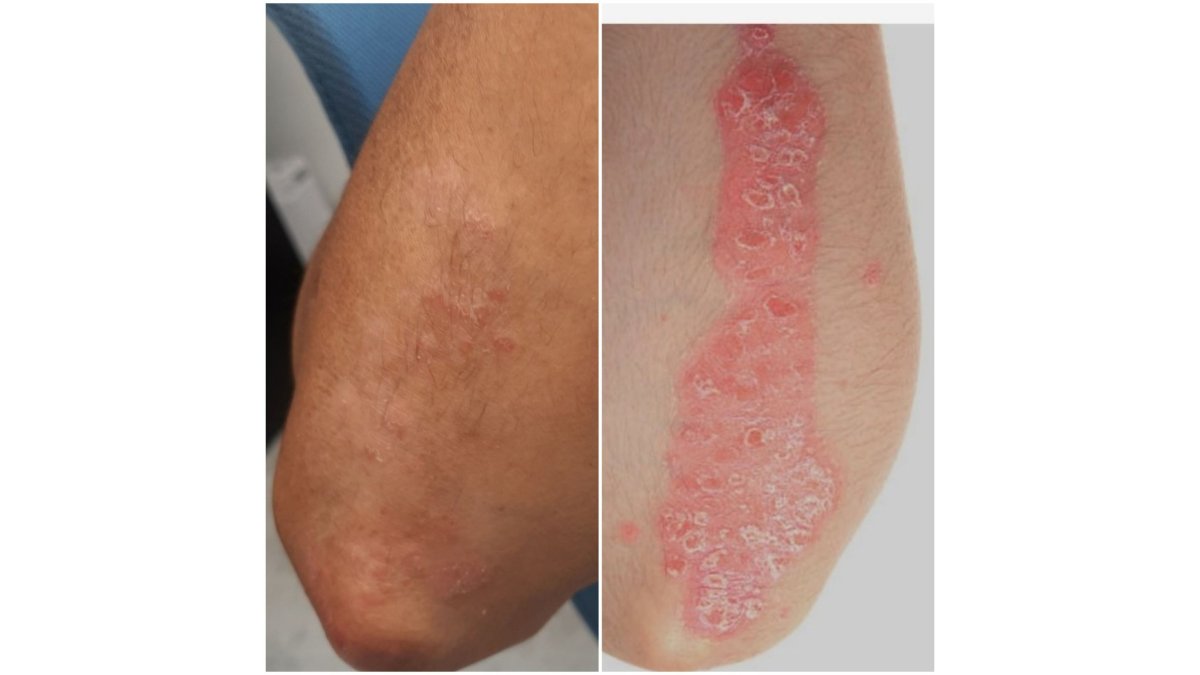
| Psoriasis plaque | Silvery scale, well-defined | Modify: avoid active plaques |
A Practical Triage Flow: Proceed, Modify, or Postpone
Most practitioners find that a simple three-question sequence keeps decisions consistent across sessions. Ask the client, then check your own hands, then decide.
Question 1: Is the skin intact? Intact skin with mild dryness or flaking can usually be worked on with reduced pressure and a fragrance-free lubricant.
Question 3: Is there any sign of infection? Warmth, pus, spreading redness, or fever moves the decision to postpone and refer urgently.
If the answer to any question is unclear, postpone. A missed session costs less than a cross-contamination incident.
Intake Questions That Surface Skin Issues Early
A structured intake form turns triage into a two-minute habit. Include questions such as: Have you had any new rashes, itching, or skin changes in the last two weeks? Have you started any new skincare products, medications, or supplements? Do you have any known allergies to fragrances, preservatives, or essential oils? Have you had a fungal or bacterial skin infection in the past month? Ask these verbally as well, because clients often omit skin concerns they consider minor.
Documentation and Consent Language
When you modify a session, note it in the client record in neutral language: "Client reported mild dryness on forearms; session modified with fragrance-free lubricant and reduced pressure; no open lesions observed." Avoid diagnostic terms. If you postpone, document the reason and the referral: "Session postponed due to spreading rash on client's lower leg; advised client to consult a healthcare professional; follow-up scheduled." Get informed consent for any modification and keep the note factual.
Contagious Conditions and Sanitation
A contagious skin condition such as ringworm or impetigo means no contact with the affected area and full sanitation of linens and equipment afterward. Use gloves for any incidental contact, change linens before the next client, and wipe down tables and bolsters with an appropriate disinfectant. When in doubt, postpone and refer.
Skin Protection for Massage Therapists: A Step-by-Step Guide
Protection follows a simple sequence: assess, soothe, then prevent. Work through it in order and you will rarely get caught out.
Total time: 10-15 minutes per incident, plus ongoing prevention.
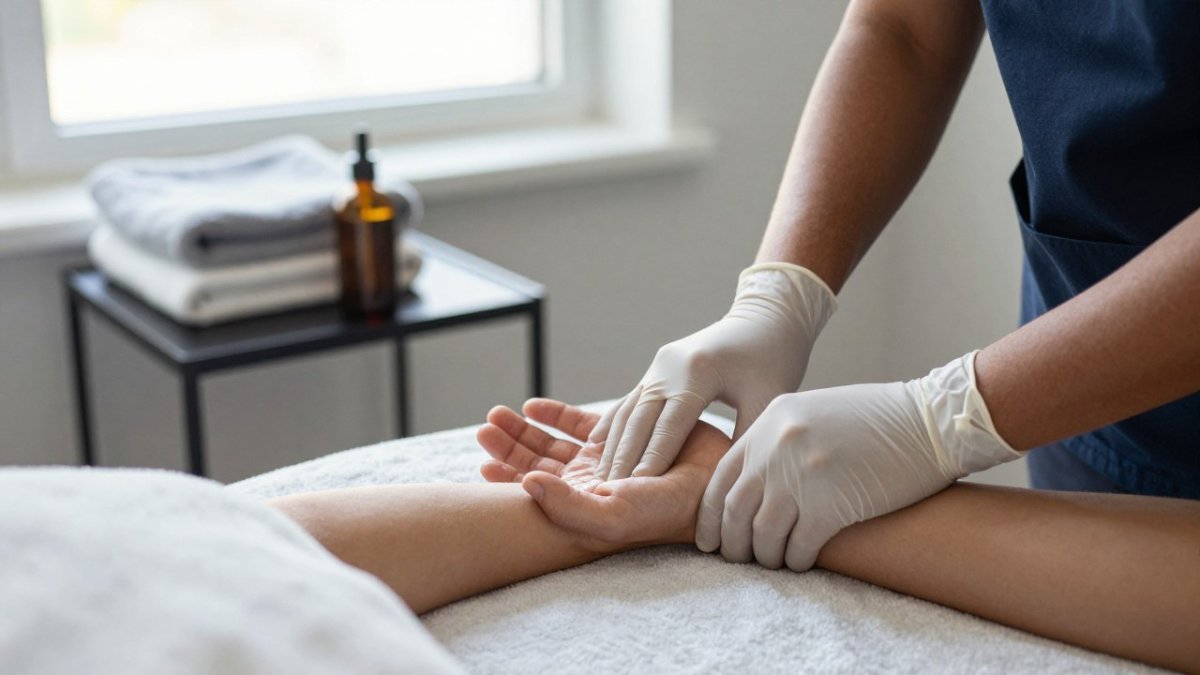
Step 1: Assess and Modify or Postpone
Stop and look before you touch. Ask the client when the irritation started, whether it itches or burns, and whether it has spread. Check your own hands too.
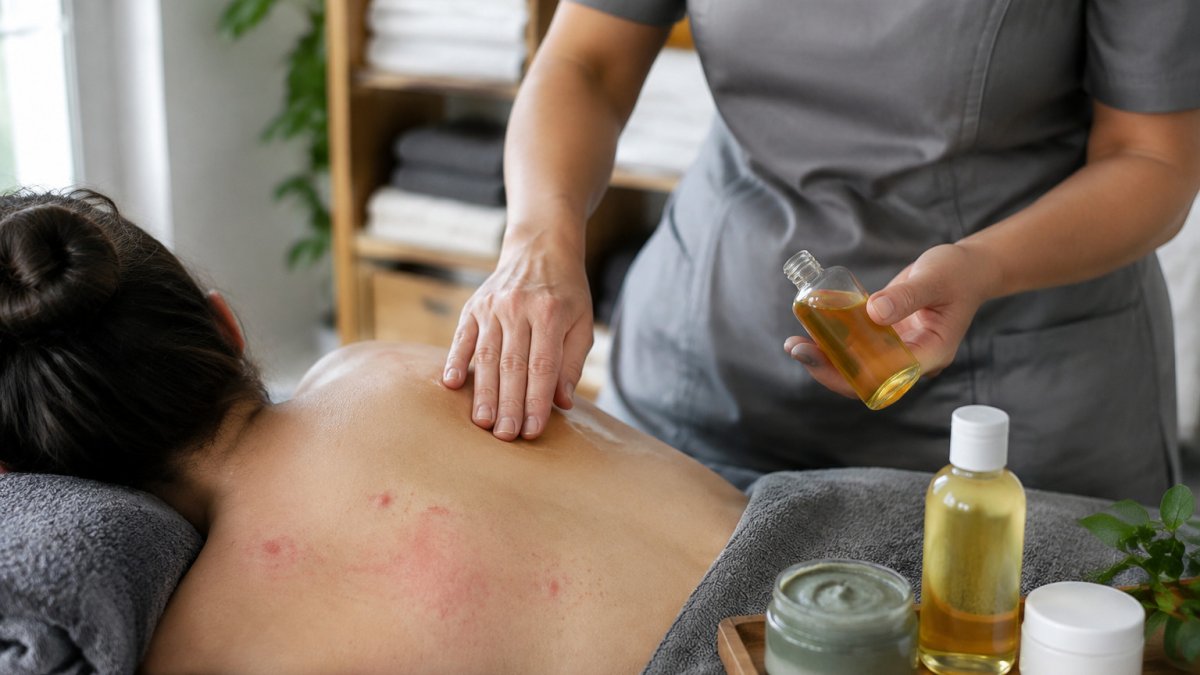
- If the skin is intact with mild dryness, proceed with reduced pressure and avoid the affected area
- If there is an open lesion, weeping, or spreading redness, postpone and refer
- If you are the one affected, switch to gloved work or reschedule
Get informed consent for any modification and note it in the client record. A structured intake form that asks about recent rashes, new products, and allergies turns this into a two-minute habit.
Step 2: Soothe and Manage Symptoms
Cool the area first. A cool compress for ten minutes reduces heat and itching.
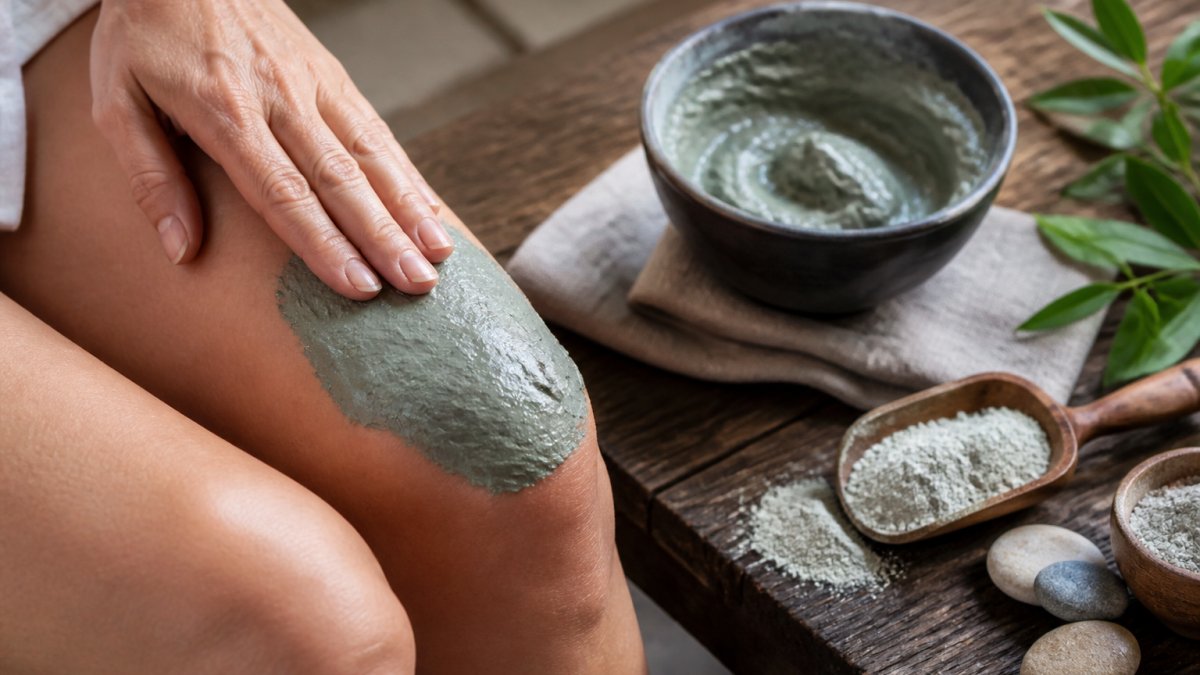
Our professional-size Oceanic Glacial Clay is a mineral-rich clay that replenishes minerals in dry skin. Apply to intact skin only, never to broken or weeping areas.
Step 3: Prevent Future Reactions
Prevention is where most therapists lose ground. Rebuild the barrier with a consistent routine: gentle cleansing, an emollient applied within three minutes of drying, and gloves for wet work. Review every product you use on clients and on yourself, and eliminate anything with fragrance or drying alcohol.
Track flares in a simple log. After a month you will see the pattern, and the pattern tells you what to change.
Step 4: Patch Test New Products Before Broad Use
Before using a new oil, cream, or glove on clients, patch test it on yourself. Apply a small amount to the inner forearm, cover it, and leave it for 48 hours without washing the area. Check at 24 and 48 hours for redness, itching, or swelling. A negative test does not guarantee no reaction, but it catches most immediate sensitivities. Keep a record of products tested and results so you are not repeating the process.
Step 5: Respond to a Suspected Reaction
If a client or you develop a reaction during or after a session, stop exposure immediately. Remove the product gently with lukewarm water and a mild cleanser, not hot water or alcohol. Document what was used, when the reaction appeared, and what you observed.
Watch out: returning to the same product after a reaction without a patch test often produces a stronger response the second time.
Choosing Products That Protect Your Skin Barrier
The best products for irritated skin are fragrance-free, alcohol-free, and rich in emollients that rebuild the barrier rather than sit on top of it. Look for short ingredient lists and avoid anything that stings on application.
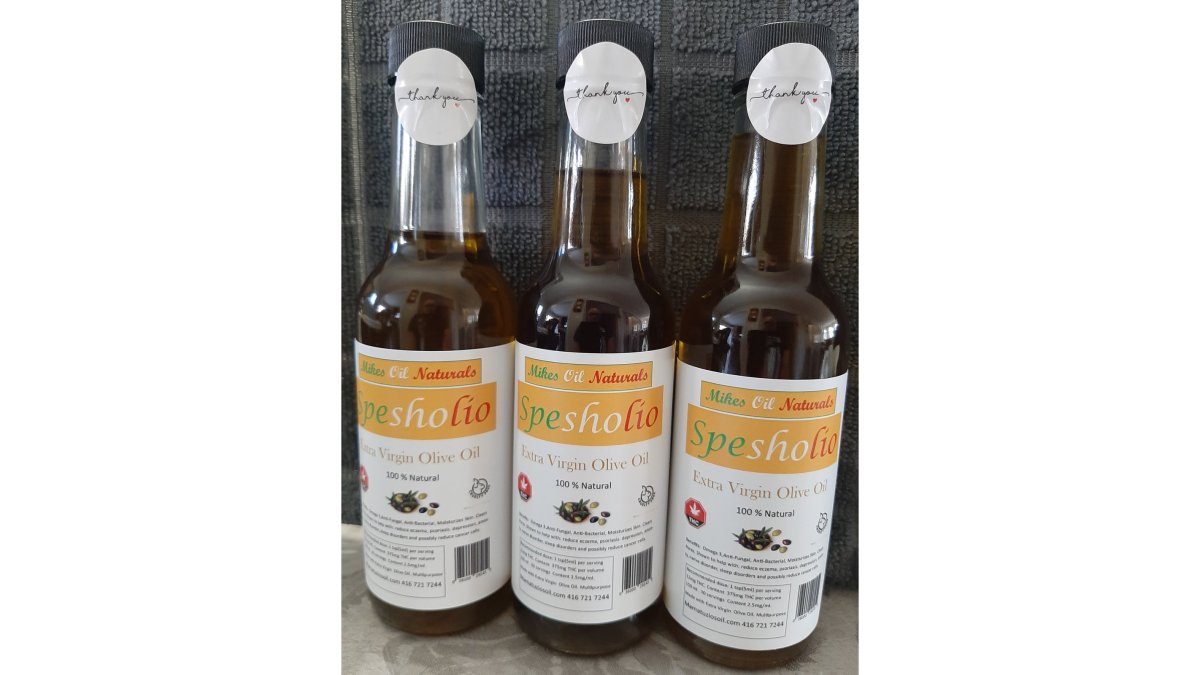
Natural doesn't automatically mean gentle, but well-formulated plant-based products can be both effective and low-irritant. Our Nature's Touch Shea Butter with CBD combines shea butter with extra virgin olive oil and CBD to add a protective layer over the epidermis, which is what reactive skin needs most. For daily maintenance between sessions, our tusc skin conditioner is built to soften and protect without heavy fragrance.
Patch test everything. A 48-hour forearm test on a small area tells you more than any label claim.
When to Refer a Client to a Healthcare Professional
Refer when the irritation is spreading, weeping, painful, or accompanied by fever, and when it does not improve within a week of removing the suspected cause. Also refer when the cause is unclear.
This is not a diagnosis, and it is not your role to make one. Distinguishing simple irritation from an allergic reaction or a possible infection means describing what you observe and directing the client to a doctor or dermatologist.
Scope of practice and infection-control requirements vary by jurisdiction, so check the guidance from your local health authority and your professional association before setting clinic policy. The WHO guidance on hand hygiene in care settings is a useful baseline for handwashing and glove protocols.
Building a Skin-Safe Practice with Mamatuziosoil
A skin-safe practice is built on three habits: assess before you touch, soothe what is already irritated, and remove the products that cause the problem. None of it is complicated. All of it has to be consistent.
Our range is 100% natural and cruelty-free, with professional-grade options including mineral-rich glacial clays that promote rehydration and replenish beneficial minerals. If you want to know how our products perform in real practices, read our testimonials and textimonials before you decide.
Your hands are your livelihood, and irritated skin is a warning you cannot afford to ignore. Build the routine now, before the next flare forces the issue.
Frequently Asked Questions
Why is my skin itchy after a deep tissue massage?
Itching after a deep tissue massage can stem from increased circulation, product residue, or a mild reaction to an ingredient in the oil or lotion. If the itch is accompanied by redness or rash, it may indicate contact dermatitis. Wash the area with mild soap and water, apply a cool compress, and monitor for improvement. Persistent or worsening symptoms should be evaluated by a healthcare professional.
Can massage oils or lotions cause contact dermatitis in therapists?
Yes. Therapists who regularly handle massage oils, lotions, and creams may develop contact dermatitis from repeated exposure to fragrances, preservatives, or essential oils. Symptoms include redness, dryness, and cracking, especially on the hands. Using fragrance-free products, wearing gloves when appropriate, and washing hands with gentle soap can reduce the risk.
When should a massage therapist avoid working on skin affected by eczema or psoriasis?
Avoid massage over actively inflamed, broken, or infected skin. If the skin is dry but intact, gentle massage with a soothing emollient may be appropriate. However, if there are open lesions, weeping, or signs of infection, postpone the session and refer the client to a healthcare professional. Always obtain informed consent and document the decision.
How can massage therapists reduce exposure to common allergens?
Read product labels to identify potential allergens such as fragrance, essential oils, and preservatives. Perform patch tests on a small area of skin before using a new product on clients. Keep a record of ingredients and reactions.