 How-to
How to Treat Cat Dry Skin at Home Safely
Quick Summary
Treat mild cat dry skin at home by brushing two to three times a week, bathing only when needed, and keeping indoor humidity comfortable. Avoid human creams and tea tree oil, and see a vet if sores, hair loss or itching appear.
- Brush two to three times a week, or daily for long-haired cats, to spread oils and lift flakes.
- Bathe only when needed, at most once every few weeks, using a mild, cat-safe shampoo.
- Use a hygrometer to check room humidity and add a humidifier if the air is very dry.
- Never apply tea tree oil, zinc oxide, salicylic acid or fragranced human products to a cat.
- See a vet if you notice open sores, bald patches, foul smell, or no improvement after two to three weeks.
Table of Contents
- Why Your Cat's Skin Is Dry and Flaky
- Signs That Need a Vet Visit Before Any Home Remedy
- What Can I Put on My Cat's Skin for Dryness?
- Home Care Routine: Brushing, Bathing and Humidity
- Diet, Water and Fish Oil for Healthier Skin
- Tracking Progress and Your Next Step With Your Vet
- Frequently Asked Questions
Why Your Cat's Skin Is Dry and Flaky
Dry skin is a common complaint among cat owners, and it often has a simple cause. The first step is always understanding why the skin is dry. A cat's coat hides a lot, so a flake here or there can slip past until it becomes a real problem.
Common causes of dry skin in cats
Several everyday factors can strip moisture from a cat's skin and leave it prone to cat dry skin. Indoor heating in winter lowers humidity and dries the air. Overbathing removes the natural oils that protect the coat. Diet matters too, since cats need enough fat and water to keep skin supple.
Other causes are less obvious:
- Low humidity from central heating or air conditioning
- Too many baths using harsh shampoos
- Missing fatty acids in the diet
- Dehydration from not drinking enough water
- Parasites or allergies that cause itching and flaking
- Age, since older cats often groom less and their coats look drier
If the dryness started suddenly or comes with hair loss, the cause may be medical.
Dandruff versus dry skin: how to tell the difference
Dandruff and dry skin look alike, but they are not the same. Dry skin usually shows fine, white flakes spread across the body, often with a dull coat. Dandruff tends to show larger flakes that cling to the fur, and it often comes with greasy patches or an odor.
Watch out: Flakes that stick to the base of the hair, or skin that looks red or oozes, can point to parasites or infection rather than simple dryness. Check with a vet before treating these at home.
Signs That Need a Vet Visit Before Any Home Remedy
Home care works well for mild dryness. Some signs mean the cat needs a veterinarian first:
- Open sores, scabs, or bleeding skin
- Constant scratching, biting, or licking that leaves bald patches
- Hair loss in patches
- A foul smell or pus
- Lethargy, weight loss, or changes in appetite
- Dryness that does not improve after two to three weeks of basic care
These signs can mean allergies, skin infections, parasites, or other medical conditions that a cream cannot fix.
What Can I Put on My Cat's Skin for Dryness?
Many owners ask what is safe to apply. The honest answer is that only a few gentle options are suitable, and most should be used sparingly.
Cat-safe moisturizers and coconut oil
A small amount of plain, unscented coconut oil is one option many owners use on dry patches. Apply a thin layer with clean fingertips and avoid areas the cat can lick heavily. Any topical product should be checked with your vet first, especially if your cat has sensitive skin.
Keep these rules in mind:
- Use a tiny amount, not a thick coat
- Choose unscented, plain products
- Patch-test on a small area first
- Stop if redness, swelling, or licking-related vomiting appears
Remedies and products to avoid
Some common household products can harm cats. Avoid human creams containing zinc oxide or salicylic acid, tea tree oil (toxic to cats), essential oil blends, and human hair or skin products with added fragrance. Never use a dog shampoo unless the label says it is safe for cats.
Home Care Routine: Brushing, Bathing and Humidity
A practical routine supports healthy skin, but the right version depends on the individual cat. Start with brushing, since it is the most useful step most owners can take at home. Brushing spreads the natural oils from the skin along the coat, lifts loose flakes out of the fur, and gives you a close look at the skin for early changes.
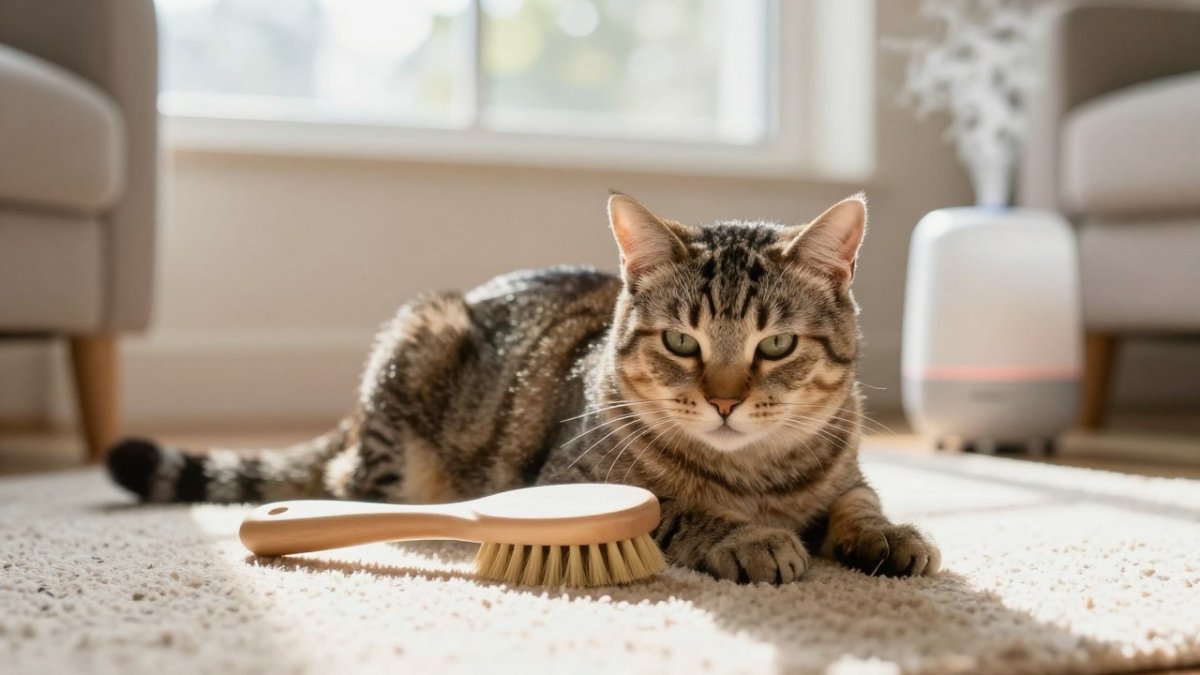
Bathing should be the exception rather than the routine. Most cats groom themselves thoroughly, and frequent washing strips the protective oils that dry skin already lacks. If a bath is needed, use a cat-safe, mild shampoo (an oatmeal-based formula is a common choice), wet the coat with lukewarm water, rinse thoroughly, and dry the cat completely and gently.
Humidity is the environmental factor many owners overlook. Winter heating and air conditioning can pull moisture from the air to levels that dry out skin. A small humidifier placed in the room where the cat sleeps is often the simplest fix. Use a hygrometer, an inexpensive household humidity gauge, to check the room, and keep the air comfortable rather than damp, since excess moisture can encourage mold and skin problems of its own.
Adjusting the routine for your cat
Not every cat can keep up with its own grooming. Older cats, overweight cats, and cats with arthritis or other mobility problems often cannot reach the lower back, hindquarters, or the area behind the shoulders, and flakes build up there. For these cats, the owner may need to brush the hard-to-reach areas, and shorter, more frequent sessions can be easier on a cat with limited tolerance. Cats with long or dense coats need closer attention because flakes and oils collect in the undercoat. Kittens and very young cats are also sensitive, so keep sessions short and positive.
Watch out: if your cat has open skin, scabs, or active itching, do not bathe or rub the area aggressively until a vet has examined it. Brushing gently around the affected area is usually safer than a full wash.
A simple weekly schedule
A workable routine for many cats looks like this: brush two to three times a week (daily for long-haired cats), check the skin during each session for redness, scabs, or hair loss, keep the humidity steady through the heating season, and bathe only when needed. Write these details in the same log you use to track progress, so you can see whether the routine is helping or whether the problem needs veterinary attention.
The article recommends a simple routine built on brushing, limited bathing and humidity control.
| Task | Recommended frequency | Key note |
|---|---|---|
| Brushing (short or medium coat) | Two to three times a week | Spreads natural oils and lifts loose flakes |
| Brushing (long-haired cat) | Daily or near-daily | Prevents mats that trap flakes against skin |
| Bathing | Once every few weeks at most | Strips protective oils; use mild, cat-safe shampoo |
| Humidity check | Use a hygrometer | Keep air comfortable, not damp |
| Skin check during brushing | Each session | Look for redness, scabs or hair loss |
Diet, Water and Fish Oil for Healthier Skin
Skin health starts from the inside, and diet is often the first thing a vet will ask about. Cats are obligate carnivores, so their skin and coat depend on adequate protein, the right balance of fats, and enough water. Wet food can contribute to a cat's daily fluid intake, which is one reason owners often consider it when skin is dry. Some owners report changes after adjusting diet and water intake, though results vary and a vet can advise on what suits a specific cat. If you are considering a change to a food marketed for skin health, choose a complete and balanced product for your cat's life stage and discuss it with your vet before switching, because abrupt changes can cause digestive upset and some "skin" foods are not nutritionally complete.
Identify the cause before adding supplements
A supplement should not be the first step. Dry skin can come from low humidity, grooming problems, dehydration, parasites, allergies, or infection, and a supplement will not fix most of these. A useful sequence is to first rule out the causes that need medical attention (see the warning signs above), then check the environment and grooming habits, then review diet and water intake. If the dryness persists after reasonable dietary and environmental changes, a vet can help decide whether a supplement is appropriate and whether further testing is needed.
Fish oil: why the dose is individual
Omega-3 fatty acids from fish oil (EPA and DHA) are discussed by some veterinarians in relation to coat and skin health. However, there is no single safe dose that suits every cat. The right amount depends on body weight, the cat's current diet (some foods already contain omega-3s, so adding more can overshoot), kidney or liver health, and whether the cat is taking any other medication. Excess fish oil can cause digestive upset and, over time, can contribute to vitamin E deficiency, which is why cat-specific formulations often include added vitamin E. Human fish oil products are often dosed for people and may contain added ingredients or vitamin A at levels unsuitable for cats.
Watch out: do not start fish oil, and do not combine it with another skin supplement, until your vet has confirmed the product and dose for your specific cat. Stop and call your vet if your cat develops vomiting, diarrhea, greasy stools, or a noticeable change in appetite after starting it.
Practical checklist before supplementing
Before starting any supplement, note the cat's approximate weight, the brand and type of current food, and any other products the cat already receives. Bring this information to your vet, and ask specifically what product, dose, and duration they recommend, what side effects to watch for, and how long to wait before judging whether it is helping. Keep a note of the start date so you can review progress at the agreed follow-up.
Tracking Progress and Your Next Step With Your Vet
Keep a simple log for two to three weeks. Note the brushing schedule, any baths, humidity changes, diet changes, and how the skin and coat look each week. Photos help you track progress.
If the skin is not improving, or if any warning sign appears, book a vet visit. Bring your log so the vet can see what you have already tried. Ask about skin testing, parasite checks, and whether a supplement or prescription treatment fits your cat's needs.
Frequently Asked Questions
What can I put on my cat's skin for dryness?
Veterinarians commonly suggest a small amount of plain, unscented cat-safe moisturizer or a thin layer of pure virgin coconut oil on dry patches. Apply sparingly with clean fingers, and only where the cat cannot lick large amounts off. Never use human creams, essential oils, tea tree oil or medicated shampoos without veterinary approval, since many are toxic when licked. If the skin is scabbed, red, or the cat keeps scratching, stop home treatment and book a vet visit.
Can you put coconut oil on a cat's dry skin?
Small amounts of pure virgin coconut oil are generally considered low risk for cats with mild dryness, and many owners use it on dry patches. Use only a thin layer, because cats groom themselves and ingesting too much can cause digestive upset or loose stools. Stop using it if the skin worsens, if redness or odor develops, or if your cat seems unwell. Confirm the amount with your veterinarian, especially for kittens, senior cats or cats with other health conditions.
Can fish oil help a cat with dry skin?
Omega-3 fatty acids from fish oil are discussed in general feline nutrition, but evidence specifically for dry skin is limited, so a vet should guide any use. Use a fish oil product formulated for cats, because human doses can be too high. Ask your vet for a dose based on body weight, and watch for vomiting, diarrhea or fishy breath. Fish oil should not replace a diagnosis if the dryness is severe or persistent.
When should I take my cat to the vet for dry skin or dandruff?
See a veterinarian promptly if your cat has scabs, sores, hair loss, open wounds, a bad smell, swelling, intense itching, or changes in behavior or appetite. Dry skin can be caused by parasites such as fleas or mites, allergies, infections, hormonal problems and other medical conditions that home care will not fix. Also book a visit if home measures have not improved the skin after about two to three weeks of consistent care.